About us

We came to make the hardest calls in energy faster to get right.

What to build and what to protect. Which vendor to sign, and on whose terms. What to do in year six when the asset drifts from what it promised. Portfolios are scaling faster than the teams running them, and those calls are still weighed by hand.

Hiring more people adds more readings of the same call. So we build software that prices those readings against each other — three modules over one record, from before FID to year twenty.

The five founders of Storinum
Marili · Oliver · Saskia · Tõnis · Artur Tallinn · building Storinum GRID

What we build

Every scenario played through, so you can sit down and decide.

Decision points run the whole length of an asset’s life: the position taken before FID, every offer in every tender round, then twenty years of variations, claim windows and reinvestment calls. Each one has options, and each option changes what the others are worth.

GRID runs the combinations and prices what each one does downstream, so you sit down to choose between priced options rather than to work out what the options are.

Why we do this

One decision, nine parties holding a piece of it.

Four seats inside the company and five counterparties outside it, each piece right on its own terms, and they meet nowhere. Then the ground moves while you are deciding — a grid fee proposal, a tariff ruling, a lead time, a financing market that tightened inside a quarter — and carrying one change across every open decision takes longer than the next change takes to arrive.

Real money sits on every one of them. We are here because it is a solvable problem that was sitting there unsolved.

one decision Commercial Technical Legal Finance Trader / offtaker EPC OEM O&M Lender
Your own seats Counterparties Dot size is the money on that party’s piece. The dashed trail is where it sat a quarter ago.
Oliver Ruus
Everybody in that room is doing their job properly. The lawyer is right, the technical lead is right, the CFO is right. And two years later you are the one explaining the trade you made that afternoon, to people who arrived long after it.
Oliver Ruus — co-founder, COO Fifteen years on infrastructure projects, green energy among them — at a DSO, at an EPC, and on the owner’s side as an investment manager. Law, then an MBA.

The team

Five founders, and what each of us owns.

We split the work the way the problem splits: what the decision is, what the energy side of it costs, and what has to keep holding for twenty years.

Marili Ruus

CEO

Marili

Owns the product and the decision logic inside it: how a position gets declared, how a disagreement gets priced, and what the platform hands back to the people who have to choose.

Ten years mentoring and coaching founders and teams, more than a hundred of them. Adtech before that.

Oliver Ruus

COO

Oliver

Owns the energy side: which decisions carry real consequence, how a clause behaves once it is tested, and what a guarantee turns out to be worth in year three.

Fifteen years on infrastructure projects — at a DSO, at an EPC, and on the owner’s side. Law, then an MBA.

Saskia

Commercial

Saskia

Owns partnerships and revenue: the relationships with asset owners and funds, and the partners who bring projects onto the platform.

Account-based work with banks and regulated financial institutions.
Tõnis

Architecture

Tõnis

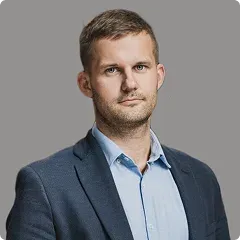
Owns platform architecture: what has to stay correct and readable across a record that runs for twenty years.

International multi-module platforms, built and run at industrial scale.

Artur

Core systems

Artur

Owns the technical backbone: robustness, correctness, and the parts that hold when money depends on the output.

A national energy utility’s software team, global enterprise commerce, and bank core systems.
What we are building

Three points in an asset’s life where the decision should already be prepared.

Each is a place where the options exist, the money is real, and laying them side by side is the work that gets skipped.

Before FID — the position

What the team actually chose, written down and dated

Trade-offs mapped, downstream impact costed, the tensions between the seats surfaced and priced. What the RFQ then asks for is that choice.

Strategic Posture Planner →

At tender — the offer

Every bid read on one basis, with the trade-offs already found

Warranty against liquidated damages, price against a payment schedule that moves your leverage, and the exposure each bid would leave with you priced in euros.

Procurement →

After COD — the move

Each move arriving with its cause named and its options priced

Approve a variation, claim before a window closes, extend a mandate, reinvest or hold — with the party who owes it named and the reversibility rated.

Resolve →

All three read and write one record. A position declared before FID is what the bids are scored against, and what the asset is measured against ten years later.

Get all three right across a portfolio, year after year, and the clock changes: calls that took a month take a week, and the ones that went to the loudest opinion go to a price instead. That is the standard we are building toward.

Where we are

An energy tech company out of Estonia, built to EU grid rules.

The platform ships with the European frame already in it — the market rules and the obligations an owner inside the single market answers to, from procurement through to what a lender asks for in year six.

Where a project sits under grid rules we have yet to cover, we add that market’s requirements as their own set, and the record keeps which one each decision was taken under.

Outside the EU, or running something the standard frame does not cover yet? Ask.

Tallinn · working across the single market

Start anywhere

Put one document in and see what it reads back.

Upload the RFQ you are working on and GRID returns what it settles, what it leaves undefined, and what each gap would be worth. It is free, and nothing goes to a vendor.

Read my RFQ, free

For owners running BESS, solar and hybrid projects across Europe.